How to Prepare a Quit Claim Deed in California
If you are searching for how to prepare a quit claim deed in California, you are likely dealing with a real property transfer that needs to be documented correctly and recorded with the appropriate county office. In many situations, people need help completing the paperwork, formatting the deed, and gathering related recording documents, but they may not need full legal representation. That is where a California Legal Document Assistant, or LDA, may be able to help with non-attorney document preparation services.
A quit claim deed is often used to transfer whatever ownership interest a person currently has in a property, without warranties of title. In California, the deed itself is only one part of the process. Depending on the county and the nature of the transfer, additional paperwork may be required for recording, such as cover page requirements, transfer tax statements, and preliminary change of ownership report forms. Understanding the process can save time and reduce the risk of rejection by the recorder.
This article explains how to prepare a quit claim deed in California, what information is commonly needed, what supporting documents may be required, and how a California LDA can assist by preparing documents at the client’s direction. It also includes an important disclaimer: an LDA is a non-attorney and cannot tell you whether a quit claim deed is the correct legal instrument for your situation.
What Is a Quit Claim Deed in California?
A quit claim deed is a document used to transfer a grantor’s present interest in real property to a grantee. The key point is that the grantor is not promising that title is clear or that they even own a particular percentage of the property. Instead, the grantor is transferring whatever interest they may have, if any, at the time of the transfer.
People often look up how to prepare a quit claim deed in California when dealing with situations such as:
- Transfers between family members
- Adding or removing a spouse from title
- Transfers after marriage or divorce
- Placing property into or out of a trust
- Correcting the way title is held
- Resolving certain informal ownership issues
However, just because a quit claim deed is commonly used in these situations does not mean it is always the right choice. The legal effect of a deed can be significant. An LDA can prepare the deed based on your instructions, but cannot advise you whether a quit claim deed is the best transfer method, whether another deed form would be more appropriate, or what legal consequences may result. For legal advice, you should consult a California real estate attorney.
What a California Legal Document Assistant Does
A California Legal Document Assistant is a registered and bonded non-attorney who provides self-help document preparation services directly to consumers. In the context of how to prepare a quit claim deed in California, an LDA may assist by typing and preparing documents based on the information and direction provided by the client.
An LDA may be able to help with:
- Preparing a quit claim deed from client-provided information
- Formatting the deed for county recording
- Including the legal description supplied by the client or existing recorded document
- Preparing common supporting forms required for recording
- Organizing a document package for signature and submission
- Providing procedural information about filing and recording steps
An LDA does not provide legal advice. That means an LDA cannot:
- Advise whether a quit claim deed is the correct deed for your transfer
- Interpret title issues or ownership rights
- Advise on tax consequences
- Resolve disputes over who should be on title
- Draft custom legal strategy for contested or complex matters
This distinction matters. If you already know what document you want prepared and need help getting it completed accurately for filing, an LDA may be a practical option. If you are unsure what kind of deed you need or have legal questions about ownership, you should speak with an attorney before moving forward.
How to Prepare a Quit Claim Deed in California: Step-by-Step
When people ask how to prepare a quit claim deed in California, they usually need a clear list of steps. While each transaction is different, the process often includes the following stages.
1. Identify the Grantor and Grantee
The deed must clearly identify the current owner who is transferring the interest, known as the grantor, and the person or entity receiving the interest, known as the grantee. Names should be listed accurately and consistently with the intended transfer documents.
The client usually provides:
- Full legal name of each grantor
- Full legal name of each grantee
- How the grantee will hold title, if known and client-directed
- Mailing address for return of the recorded document
If you are unsure how title should be held, that is a legal question rather than a document preparation issue. An LDA cannot advise you on vesting choices.
2. Obtain the Correct Property Description
A valid deed should include the property’s legal description, not just the street address. In many cases, the legal description can be found on a prior recorded deed. The assessor’s parcel number may also be included if required or customary, but it does not replace the legal description.
For anyone researching how to prepare a quit claim deed in California, this is one of the most important practical points. Recorder offices commonly reject deeds that are incomplete, unclear, or missing a proper legal description.
3. Include Required Recording Information
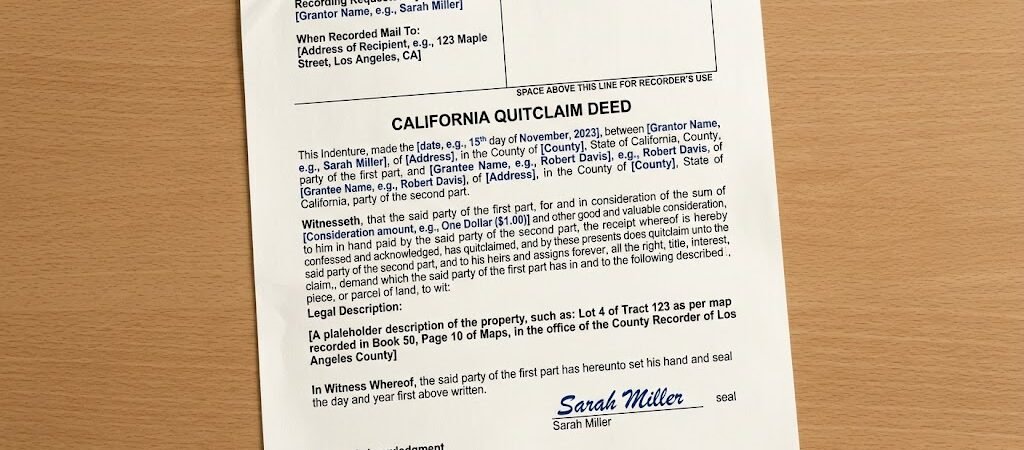
California deeds typically include recording-related information at the top of the first page, such as:
- Name and address of the person requesting recording
- Name and address where the recorded document should be returned
- Space for the recorder’s use
- Title of the document, such as Quitclaim Deed or Quit Claim Deed
County formatting requirements can vary. Margins, page size, legibility, and placement of recording information may affect whether the document is accepted. An LDA can help prepare the document in a recorder-friendly format based on standard county requirements and the information supplied by the client.
4. State the Documentary Transfer Tax Information
Many California property transfers require a statement concerning documentary transfer tax, or an exemption if no tax is due. The deed may contain language indicating the amount of tax due or the reason an exemption is claimed, depending on the nature of the transaction and county practice.
This is another area where people searching for how to prepare a quit claim deed in California often run into confusion. The form of the statement and whether additional county tax declarations are needed can depend on local recording procedures. An LDA can prepare the paperwork based on the client’s instructions, but cannot advise on tax liability or whether a claimed exemption is legally correct. Tax and legal questions should be directed to an attorney or tax professional.
5. Prepare the Signature and Notary Section
Quit claim deeds in California must generally be signed by the grantor and notarized before recording. The notarial certificate must comply with California requirements. If more than one grantor is transferring an interest, each required signature should be properly notarized.
Before signing, the grantor should carefully review the completed deed to confirm that the names, property information, and transfer details match their instructions.
6. Complete Supporting Recording Forms
In addition to the deed itself, counties often require supporting paperwork. A person looking up how to prepare a quit claim deed in California should expect that the deed may not be the only document needed.
Common examples include:
- Preliminary Change of Ownership Report (PCOR): Frequently required when a deed is recorded in California, unless a valid alternative applies.
- County cover sheet or cover page: Some counties have specific first-page or cover requirements.
- Transfer tax affidavit or declaration: In some counties or transfer types, additional statements may be needed.
- Other local recorder forms: County-specific procedures may apply.
An LDA may assist by preparing these forms using the information provided by the client, helping assemble the packet for submission to the recorder.
7. Record the Deed in the Correct County
The quit claim deed is usually recorded in the county where the property is located. Recording fees apply, and the recorder will review the document package for basic compliance. If accepted, the deed becomes part of the public record.
Recording is a critical step in how to prepare a quit claim deed in California because an unrecorded deed may create practical problems, even if it has been signed. Recording helps establish a public chain of title and provides notice of the transfer.
Common Information Needed to Prepare a Quit Claim Deed
If you are ready to move forward, it helps to gather the information commonly needed for deed preparation. A California LDA may ask for:
- The full names of the grantor and grantee
- The property address
- The legal description from a prior deed or title document
- The assessor’s parcel number, if available
- The mailing address for tax statements or return of the recorded deed
- The reason for transfer, if needed for transfer tax or ownership reporting forms
- A copy of the current deed, if available
- The county where the property is located
Providing complete and legible information can make the process smoother and reduce delays.
Why Deeds Get Rejected for Recording
One reason many people seek help with how to prepare a quit claim deed in California is that recorder rejections can be frustrating and time-consuming. Common reasons for rejection include:
- Missing or incomplete legal description
- Incorrect notary acknowledgment
- Illegible text or poor formatting
- Insufficient margin space
- Missing transfer tax statement
- Missing Preliminary Change of Ownership Report
- Inconsistent names or property information
- Failure to include required county-specific information
A properly prepared document package can help reduce these issues. While no non-attorney document preparer can guarantee recorder acceptance, careful preparation based on client-provided information is often valuable.
When People Commonly Need LDA Help
Many clients searching how to prepare a quit claim deed in California are not looking for litigation or legal analysis. They already know they need paperwork prepared and want practical assistance with the process. Common situations include:
- A spouse wants to be added to title after marriage
- One spouse is being removed from title after divorce based on settlement terms
- A parent wants to transfer an interest to a child
- A homeowner wants to transfer property into a living trust
- A family wants to correct title paperwork after a prior transfer was never completed
Even in these common scenarios, legal and tax consequences may exist. An LDA can prepare the client-directed documents, but cannot evaluate whether the transfer is advisable or explain the legal effect of the transfer beyond general procedural information.
Important Disclaimer About Legal Advice
A California Legal Document Assistant is a non-attorney who prepares documents at the client’s direction. An LDA cannot provide legal advice, select legal strategies, or tell you whether a quit claim deed is the right instrument for your transaction. If you have questions about ownership rights, transfer tax consequences, title issues, community property, trust transfers, probate concerns, or whether another type of deed should be used, you should consult a licensed California attorney.
This disclaimer is essential to understanding how to prepare a quit claim deed in California through an LDA service. The role of the LDA is document preparation, not legal counsel.
Benefits of Using an LDA for Quit Claim Deed Preparation
For clients who already know what document they want prepared, using an LDA can offer several practical benefits:
- Efficiency: Help organizing the deed and related recording paperwork
- Accuracy in formatting: Attention to recorder-facing document structure and presentation
- Convenience: Assistance gathering the standard information needed for preparation
- Cost-conscious support: Often a more affordable option than hiring an attorney for straightforward, client-directed paperwork
- Process familiarity: Experience with common California recording forms and procedures
For high-intent searchers trying to understand how to prepare a quit claim deed in California, this kind of support can be especially helpful when the goal is to move from uncertainty to a ready-to-sign and ready-to-record document package.
Practical Tips Before You Record
- Review the prior deed carefully and make sure the legal description is complete.
- Confirm the exact spelling of all names.
- Check county recorder requirements for formatting and supplemental forms.
- Do not sign until you are in front of a notary if notarization is required.
- Make sure transfer tax and ownership reporting forms are completed consistently.
- Keep copies of everything submitted for recording.
- If you are unsure whether a quit claim deed is appropriate, speak with an attorney before signing.
Conclusion
Understanding how to prepare a quit claim deed in California involves more than filling in a single form. A proper deed package may include the deed itself, transfer tax language, ownership reporting forms, and county-specific recording requirements. For people who know they want a quit claim deed prepared and need non-attorney help with the paperwork, a California Legal Document Assistant can provide valuable client-directed document preparation support.
At the same time, it is important to remember the limits of that service. An LDA is not a lawyer and cannot advise whether a quit claim deed is the right legal tool for your transfer. If you need legal guidance, title analysis, or advice about the consequences of the transfer, consult a qualified California attorney.
If your goal is to get your deed documents prepared clearly, professionally, and in a format suitable for recording based on your instructions, an LDA service can help streamline the process and reduce paperwork stress.