California Deed Transfer Document Preparation: Understanding the Process
Real property transfers in California often look simple on the surface, but the paperwork can quickly become detailed, technical, and time-sensitive. Whether someone is transferring a home to a family member, changing title after marriage, removing a former spouse from title, moving property into a trust, or documenting another ownership change, the deed and supporting forms must usually be prepared carefully for recording. That is why many people search for California deed transfer document preparation services when they are ready to complete a transfer.
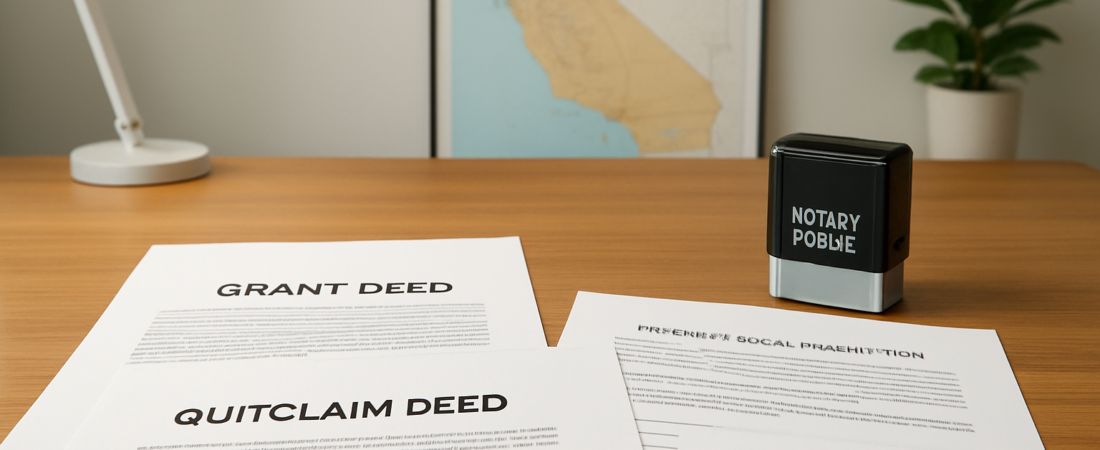
A California Legal Document Assistant, or LDA, can help with document preparation for deed and property transfer paperwork. An LDA is a non-attorney who prepares legal documents at the client’s specific direction. In the context of California deed transfer document preparation, that may include preparing a client-directed grant deed, quitclaim deed, preliminary change of ownership report, and other related transfer forms so the paperwork package is more organized and recording-ready.
However, it is important to understand the limits of what an LDA can do. An LDA cannot tell a client which deed type to use, cannot provide legal advice, cannot interpret title issues, and cannot advise on tax consequences. The client must instruct the LDA regarding the document they want prepared, and legal questions should be directed to a licensed California attorney or other qualified professional, such as a tax advisor.
What Is California Deed Transfer Document Preparation?
California deed transfer document preparation generally refers to the preparation of the paperwork used to transfer an interest in real property from one party to another. In California, the deed is the core title transfer document, but a complete filing package may also include additional forms required by the county recorder or county assessor.
Depending on the transaction, the paperwork may involve:
- A grant deed
- A quitclaim deed
- A preliminary change of ownership report
- Transfer tax declarations
- Documentary transfer tax statements
- Ownership vesting language
- Recording cover information or formatting elements required by the county
- Supporting declarations or exemption statements, when applicable and client-directed
The exact paperwork can vary based on the county, the nature of the transfer, and the client’s instructions. Even when the transfer is between family members or involves no sale, proper document preparation still matters because deeds become part of the public record and affect title to real property.
How a California Legal Document Assistant Helps
For people who know what document they want prepared but do not want to draft it themselves, an LDA can provide practical, document-focused support. In California deed transfer document preparation, the role of the LDA is administrative and clerical, not legal.
An LDA may help by:
- Typing and formatting a deed based strictly on the client’s instructions
- Preparing client-directed grant deed or quitclaim deed paperwork
- Including legal descriptions supplied by the client or from existing documents provided by the client
- Preparing related forms commonly submitted with a deed for recording
- Organizing a document package for signature, notarization, and recording
- Checking for obvious clerical completeness, such as blank fields or missing names, based on the client’s provided information
- Providing general procedural information about document preparation and filing steps, without giving legal advice
For many property owners, this kind of assistance can save time and reduce paperwork frustration. A deed transfer may involve multiple names, vesting language, assessor forms, mailing addresses, parcel information, and county recording requirements. Having help with California deed transfer document preparation can make the process more manageable when the client already knows what transfer they want to document.
Important Disclaimer: An LDA Is Not an Attorney
A California Legal Document Assistant is a non-attorney. An LDA prepares documents only at the client’s direction. An LDA cannot provide legal advice, cannot recommend which deed type to use, cannot decide how title should be held, cannot resolve title defects, cannot determine whether a transfer will affect property taxes, and cannot analyze legal or tax consequences.
If you have questions such as these, you should consult a licensed California attorney:
- Should I use a grant deed or a quitclaim deed?
- What ownership language is best for my situation?
- Will this transfer affect my rights, liabilities, or estate plan?
- Are there title problems that need to be addressed first?
- Will the transfer trigger reassessment, documentary transfer tax, or other tax consequences?
- Do I need additional documents beyond the deed?
If you are unsure about the legal effect of a real property transfer, it is strongly recommended that you speak with an attorney before proceeding. An LDA can prepare documents, but only from your instructions.
Common Deeds Used in California Property Transfers
Grant Deed
A grant deed is commonly used in California to transfer real property. Clients often request preparation of a grant deed when transferring ownership between individuals, family members, spouses, or into a trust. In a California deed transfer document preparation setting, an LDA may prepare a grant deed if the client specifically instructs the LDA to do so.
Because the legal effect of a grant deed can matter, an LDA cannot advise whether a grant deed is appropriate for a specific situation. That decision belongs to the client, ideally after obtaining legal advice if needed.
Quitclaim Deed
A quitclaim deed is another common title transfer document in California. It is frequently used in certain intra-family transfers, divorce-related transfers, or other situations where a person wants to transfer whatever interest they may have in the property. In California deed transfer document preparation, an LDA can prepare a quitclaim deed if that is the document the client directs the LDA to prepare.
Again, the LDA cannot advise whether a quitclaim deed is the right choice. If there is uncertainty about title rights, warranties, or transfer consequences, legal counsel is appropriate.
Other Transfer-Related Documents
Depending on the transfer, related paperwork may be needed along with the deed. A client-directed document package may include forms for the assessor or recorder, transfer tax statements, or exemption language based on the client’s instructions and the county’s requirements. A key part of California deed transfer document preparation is making sure the document set is organized for the next step in the process.
Situations Where People Need Deed Transfer Paperwork
Property transfers arise in many everyday situations. Some of the most common include:
- Adding a spouse to title
- Removing a spouse after divorce, if directed by judgment or agreement
- Transferring property to a revocable living trust
- Transferring property out of a trust
- Gifting property to a child or other relative
- Changing how co-owners hold title
- Correcting a prior deed, when appropriate and client-directed
- Transferring inherited property, where authorized and legally appropriate
Even when the transfer seems straightforward, the recording paperwork can still require precision. Names must be accurate, the legal description must match the property, addresses must be complete, and the supporting forms must be consistent. That is one reason people seek California deed transfer document preparation assistance rather than attempting to assemble the package alone.
What Information Is Usually Needed for Deed Preparation?
When requesting California deed transfer document preparation, clients are often asked to provide information and source documents so the deed can be prepared according to their instructions. While requirements vary by situation, commonly needed items include:
- The full names of the current owner or owners
- The full names of the new owner or owners
- The property address
- The assessor’s parcel number, if available
- The legal description of the property
- A copy of the current deed, if available
- The client’s instructions for how title should be shown
- The return mailing address after recording
- Any exemption language or transfer tax information the client wants included, if applicable
- County-specific information required for recording or assessor forms
An LDA may use the information supplied by the client to prepare the requested documents. If the client does not know what language should be used or what deed should be selected, that becomes a legal question outside the scope of LDA services.
Recording-Ready Paperwork: Why Organization Matters
Preparing a deed is only part of the process. Many transfers also require a recording-ready package. Counties in California have formatting rules, fee schedules, and filing expectations that can affect whether a document is accepted for recording. While an LDA cannot guarantee recorder acceptance or cure legal defects, an LDA can help organize the paperwork based on the client’s instructions.
In practical terms, California deed transfer document preparation may involve attention to:
- Recorder margins and page formatting
- Proper identification of the document title
- Mailing and return addresses
- Notary acknowledgment blocks
- Assessor forms that accompany the deed
- Consistency between names, addresses, and legal descriptions across documents
- Assembly of the paperwork package in a logical order
This kind of clerical preparation can help reduce avoidable delays. A deed transfer often depends on accurate paperwork, proper signatures, notarization, and timely recording.
General Steps in the California Property Transfer Process
Although each transfer is different, the process often follows a similar path. Here is a general overview of how California deed transfer document preparation fits into the larger transaction:
- Identify the intended transfer. The client determines what ownership change they want to make.
- Choose the document type. The client decides what deed or transfer document they want prepared. If the client is unsure, they should consult an attorney.
- Provide information and source documents. The client supplies names, property details, legal description, and any existing deed or related paperwork.
- Document preparation. The LDA prepares the deed and related forms strictly from the client’s instructions.
- Review by the client. The client reviews the prepared documents for accuracy and completeness.
- Sign and notarize. The deed is signed and notarized as required.
- Submit for recording. The signed documents are presented to the appropriate county recorder, along with fees and any required forms.
- Retain recorded copies. After recording, the client keeps copies for their records.
Because county practices can vary, some transfers may involve additional steps. An LDA can assist with preparation and organization, but not with legal analysis of the transfer itself.
When an Attorney May Be Especially Important
Some deed transfers involve more than basic document preparation. In these situations, legal advice may be essential before any deed is signed. Examples include:
- Disputes over ownership rights
- Unclear vesting on an existing deed
- Transfers involving deceased owners
- Probate or trust administration questions
- Potential title defects or clouds on title
- Concerns about lender due-on-sale clauses
- Questions about community property, survivorship, or separate property rights
- Potential gift tax, reassessment, or capital gains issues
These are not clerical matters. They require legal or tax analysis. A California LDA cannot answer those questions and should not be used as a substitute for an attorney.
Benefits of Using an LDA for California Deed Transfer Document Preparation
When the client already knows what they want prepared, working with an LDA can offer practical advantages. For many people, the value lies in having help with forms, formatting, and package assembly without hiring a full-service law firm for basic document preparation.
Potential benefits include:
- Help preparing client-directed deed paperwork
- Assistance organizing transfer documents for recording
- Reduced clerical burden for the client
- A more streamlined preparation process
- Support focused on document completion rather than legal strategy
For straightforward matters, California deed transfer document preparation through an LDA may be a useful option for clients who understand the transfer they want and need non-attorney document assistance.
Choosing a California LDA for Deed and Property Transfer Paperwork
If you are looking for help with California deed transfer document preparation, it is wise to choose a service that clearly explains the limits of LDA work, communicates professionally, and focuses on accurate client-directed document preparation. You want a provider who understands that deed paperwork must be handled carefully and that legal questions belong with an attorney.
When speaking with a document preparation service, consider asking:
- Do you prepare deeds only from the client’s instructions?
- Can you help prepare related recording forms?
- What information do you need from me to begin?
- Can you help organize the package for recording?
- Do you clearly explain that you are not providing legal advice?
These questions can help set realistic expectations and ensure that the service matches your needs.
Final Thoughts on California Deed Transfer Document Preparation
Property transfers in California require more than just filling in a name on a form. The deed, legal description, vesting information, and related recording paperwork all need to be prepared carefully and consistently. If you know what document you want and need non-attorney help assembling the paperwork, a California Legal Document Assistant may be able to assist with California deed transfer document preparation.
An LDA can prepare client-directed grant deed, quitclaim deed, and related transfer paperwork, and can help organize a recording-ready package. But an LDA cannot advise which deed to use, cannot evaluate title issues, and cannot explain legal or tax consequences. For those questions, consult a licensed California attorney and, where appropriate, a tax professional.
If your goal is to complete a property transfer with properly prepared, client-directed paperwork, understanding the role of an LDA is the first step. With the right expectations and the right information, California deed transfer document preparation can be handled in a more organized and efficient way.
Disclaimer: A Legal Document Assistant is not an attorney and cannot provide legal advice. An LDA prepares documents at the client’s direction only. If you need advice about which deed to use, title rights, tax consequences, transfer exemptions, or the legal effect of a property transfer, consult a licensed California attorney.