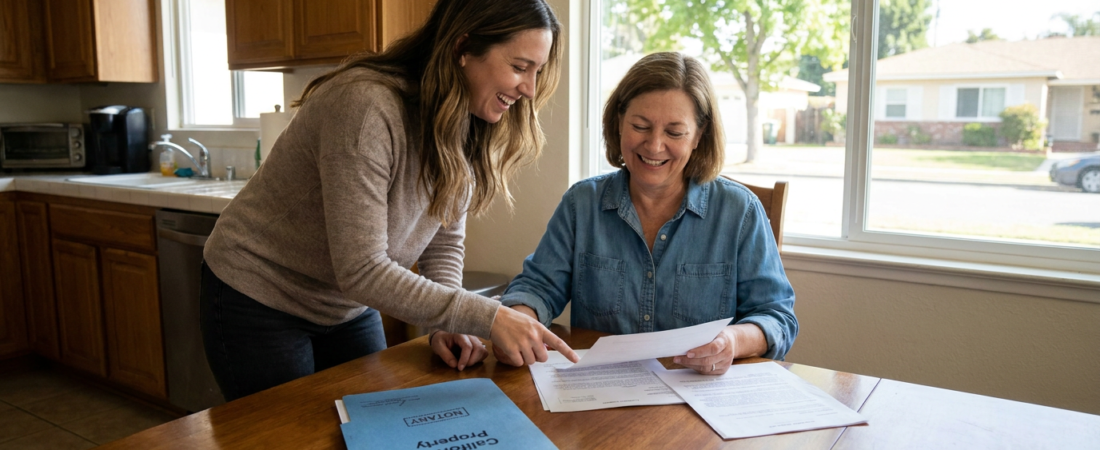
For many families, a transfer on death deed California homeowners can use is one of the least-known ways to pass a home to a loved one without full probate. It can be a practical, low-cost option for someone with a simple estate, but it only works when the legal requirements are followed exactly. To see how it works in real life, consider Maria, a widowed California homeowner who wanted her house to go to her adult daughter without making the process harder or more expensive than necessary.
Maria owned one home, had one intended beneficiary, and did not have a complicated estate. She had heard about living trusts, but she wanted to understand whether there was a simpler document for her situation. That is when she learned about the revocable transfer on death deed, often called an RTODD. For homeowners like Maria, it can be a useful tool, but it is not the right fit for everyone.
What Is a Transfer on Death Deed in California?
A revocable transfer on death deed is a legal document that allows a California homeowner to name who should receive the property when the owner dies. During the owner’s lifetime, the owner keeps full ownership and control of the property. The named beneficiary does not receive present ownership rights just because the deed is signed and recorded.
That feature appealed to Maria. She did not want to give her daughter any current ownership interest. She wanted to stay in control, keep the right to sell or refinance if needed, and avoid changing title during her lifetime. A transfer on death deed can allow that.
In simple terms, the deed says: when the owner dies, the property transfers to the named beneficiary, assuming the deed was validly completed and no later legal issue defeats it.
Why This Option Suited Maria’s Simple Estate
Maria’s situation was straightforward:
- She owned a single-family home in California
- She wanted the home to go to one adult child
- She did not need to create detailed instructions for multiple beneficiaries
- She wanted a lower-cost option than a more comprehensive estate plan
- She wanted to keep control of the home while alive
For someone with a simple estate, a transfer on death deed may be worth considering. It can be especially attractive when the main goal is to pass one home to one or more named beneficiaries without changing current ownership.
But Maria also learned that simple does not mean risk-free. A transfer on death deed has strict formalities and important limitations.
Transfer on Death Deed California Requirements
California requires careful compliance with the statutory rules. If the deed is not properly completed, signed, witnessed, notarized, and recorded on time, it may fail.
Key legal requirements include:
- The correct form must be used. The deed must meet California’s legal requirements for a revocable transfer on death deed.
- The owner must sign the deed. The property owner must sign the document.
- The signature must be notarized. Notarization is required.
- Two witnesses are required. The deed must be witnessed as required by law.
- The deed must be recorded within 60 days. Timing matters. If it is not recorded within 60 days of signing, the deed may not be effective.
- The property must qualify. Not every property type is eligible.
For Maria, the 60-day recording rule was especially important. She almost assumed she could sign the deed and record it later when convenient. That mistake could have defeated the entire plan.
How the Process Usually Works
Although each situation is different, the basic process often looks like this:
- Confirm the property and ownership details. Review the current deed and legal description.
- Prepare the transfer on death deed. The document must accurately identify the owner, property, and beneficiary.
- Sign with required formalities. The owner signs, the signature is notarized, and the witnesses sign as required.
- Record the deed within 60 days. Recording must occur in the proper county recorder’s office within the legal time limit.
- Store copies safely. Keep a recorded copy with important estate documents.
- Review the plan over time. If life changes, the deed may need to be revoked or replaced.
Maria appreciated that the process was more affordable than creating a full trust package, but she also realized that accuracy mattered. A wrong legal description, a missed signature, or late recording could create serious problems for her daughter later.
Who a Transfer on Death Deed May Suit
This option may work best for homeowners who have:
- A relatively simple estate
- One home or qualifying residential property
- Clear beneficiaries
- No need for detailed trust administration instructions
- No major concerns about blended family conflict
- A desire to keep present ownership unchanged
For Maria, it fit because her goals were limited and clear. She did not need asset management for a minor child, special instructions for a beneficiary with disabilities, or a plan for multiple properties in different states.
Its Limits Compared With a Living Trust
Maria also learned that a transfer on death deed is not the same as a living trust. A living trust is often broader and more flexible.
Common limits of a transfer on death deed include:
- It only addresses the specific property. It does not create a full estate plan for all assets.
- It may not handle complexity well. Multiple beneficiaries, backup plans, or family disputes can create complications.
- It does not provide trust-style management. If a beneficiary needs help managing assets, a trust may be better.
- It may not avoid every post-death issue. Beneficiaries may still face paperwork and procedural steps after the owner’s death.
- It can create unintended results if circumstances change. Marriage, divorce, death of a beneficiary, or refinancing may require updates.
A living trust may be the better choice when someone owns multiple assets, wants a more complete estate plan, wants detailed backup provisions, or expects family complications. Maria’s deed-based plan worked because her estate was simple. Someone else with a blended family or several properties might need a more comprehensive solution.
Common Mistakes to Avoid
The biggest problems often come from small errors. Common mistakes include:
- Using the wrong form
- Misspelling names or listing the wrong vesting information
- Using an incorrect or incomplete legal description
- Failing to follow witness requirements
- Missing notarization
- Recording after the 60-day deadline
- Assuming the deed covers all assets
- Failing to review the deed after major life changes
- Naming beneficiaries without considering what happens if one dies first
Maria nearly made another common mistake: she thought naming her daughter on the deed meant she no longer needed to think about the rest of her estate. In reality, the deed only addressed the house. Her bank accounts, personal property, and other documents still needed attention.
How a Legal Document Assistant Can Help
For homeowners who already know what document they want, a registered California Legal Document Assistant may help with document preparation in a self-help capacity. That can include:
- Providing procedural information about required forms
- Typing or preparing documents at the client’s direction
- Helping organize supporting information needed for preparation
- Assisting with filing or recording logistics
Important disclaimer: A Legal Document Assistant is not an attorney and cannot give legal advice, choose for you whether a transfer on death deed or living trust is best, or advise you about your legal rights, tax consequences, or how to resolve disputes. If you need legal advice, you should speak with a licensed California attorney.
That distinction matters. Someone like Maria, who had a simple goal and knew the document she wanted, may find document assistance helpful for preparing and recording paperwork. But if the facts are complicated, legal advice should come from a lawyer.
Practical Takeaways for California Homeowners
If you are considering a transfer on death deed California property owners may use, remember these points:
- It can be a lower-cost option for a simple estate
- The owner keeps control during life
- The deed must be properly signed, notarized, witnessed, and recorded within 60 days
- It is not a full substitute for a complete estate plan in every situation
- Accuracy is critical to avoid future problems
Maria’s story is relatable because many homeowners are in the same position: one house, one intended beneficiary, and a desire to keep things simple. For the right person, a revocable transfer on death deed can be a useful tool. The key is understanding both its convenience and its limits.
If you need help with self-help document preparation for a transfer on death deed or other California legal forms, visit la-legaldocumentassistants.com to learn how our registered Legal Document Assistant service can assist you with the paperwork process.