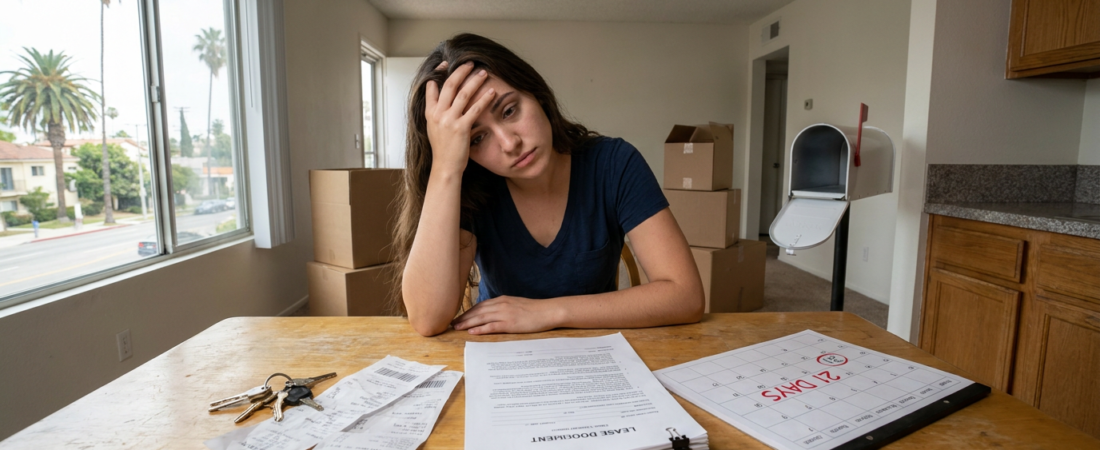
When a landlord won’t return security deposit money after you move out, it can feel like one more unfair surprise at the end of an already stressful move. That is exactly how it felt for Marisol, a Los Angeles renter who spent days cleaning her apartment, patched small nail holes, returned her keys on time, and expected her deposit back within a few weeks. Instead, day 21 came and went with no check, no itemized statement, and no explanation. What started as frustration quickly turned into a lesson in California tenant rights.
If this sounds familiar, you are not alone. California law gives tenants important protections when it comes to security deposits. Understanding what landlords can deduct, what deadlines they must follow, and what steps you can take next can help you respond with confidence.
The 21-Day Rule in California
In California, a landlord generally must do one of two things within 21 calendar days after a tenant moves out:
- Return the full security deposit, or
- Provide an itemized statement of deductions and return any remaining balance.
This deadline matters. If the landlord misses it, that can strengthen the tenant’s position in a dispute. In some cases, if a court finds the deposit was withheld in bad faith, the landlord may be ordered to pay up to twice the amount of the security deposit as a penalty, in addition to returning the deposit itself.
For Marisol, that 21-day mark was the turning point. She checked her records, confirmed the move-out date, and realized the landlord had not followed the basic rule.
When a Landlord Won’t Return Security Deposit: What Is Allowed?
Not every deduction is illegal. California landlords can make certain deductions from a security deposit, but only for valid reasons. Commonly allowed deductions may include:
- Unpaid rent
- Cleaning needed to return the unit to the same level of cleanliness it had at move-in
- Repair of damage beyond normal wear and tear
- Replacement of personal property, such as keys or furnishings, if the rental agreement allows it and the loss was caused by the tenant
What landlords generally cannot do is use your deposit for routine turnover costs or ordinary aging of the unit.
Normal Wear and Tear vs. Damage
This is where many disputes happen. A landlord may call something “damage” that is really just normal use over time.
Examples of normal wear and tear may include:
- Minor scuff marks on walls
- Light carpet wear from ordinary walking
- Faded paint or sun-worn blinds
- A few small nail holes from hanging pictures
Examples of possible tenant-caused damage may include:
- Large holes in walls
- Broken doors or windows
- Pet stains or severe carpet damage
- Missing fixtures or appliances
In Marisol’s case, the landlord later claimed the apartment needed “full repainting and deep restoration,” but her move-in and move-out photos showed a different story. The walls had minor marks, but nothing unusual for a tenant who had lived there for two years.
What Your Landlord Should Provide
If deductions are taken, the landlord should provide an itemized statement describing them. Depending on the amount and nature of the work, supporting documentation such as receipts or estimates may also be required. The purpose is transparency. A vague message like “cleaning and repairs – $1,850” is often not enough.
Review the statement carefully and ask yourself:
- Was it sent within 21 days?
- Are the deductions specific?
- Do the charges seem reasonable?
- Do they reflect actual damage rather than normal wear?
- Do the amounts match any receipts or estimates provided?
If the answer to several of these questions is no, you may have grounds to challenge the withholding.
Step-by-Step: What to Do if a Landlord Won’t Return Security Deposit
1. Gather your evidence
Before contacting the landlord, organize your records. Helpful documents include:
- The lease or rental agreement
- Move-in photos or videos
- Move-out photos or videos
- Cleaning receipts
- Messages or emails with the landlord
- Proof of key return and move-out date
- Your forwarding address notice
- Any itemized statement or envelope showing postmark date
Marisol had taken a quick video on move-out day, mostly for her own peace of mind. That simple step became one of her strongest pieces of evidence.
2. Compare the timeline
Count 21 calendar days from the date you moved out and returned possession of the unit. If no deposit, no balance, and no proper itemized statement arrived by then, note that clearly in your records.
3. Review the deductions
If you did receive a statement, compare each deduction to the condition of the property and your lease terms. Look for inflated cleaning fees, repainting charges for ordinary wear, or unsupported repair claims.
4. Send a demand letter
Before escalating, many tenants send a written demand letter. This is often an important step because it creates a paper trail and gives the landlord a final chance to resolve the issue.
Your demand letter should be calm, factual, and direct. It may include:
- Your name and the rental property address
- The date you moved out
- The amount of the security deposit
- A statement that California law requires return of the deposit or an itemized statement within 21 days
- An explanation of why you dispute the withholding
- A request for payment by a specific date
- A statement that you may pursue further action if the matter is not resolved
Marisol sent her demand letter by certified mail and email. Five days later, the landlord responded for the first time with a reduced offer. That alone showed the letter had impact.
5. Know when to escalate
If the landlord ignores your demand letter, refuses to return the deposit, or insists on improper deductions, it may be time to escalate. The right next step depends on your situation, documents, and goals, but many tenants begin by preparing formal paperwork and organizing evidence for the next stage of the dispute process.
If bad-faith withholding appears to be involved, keep that issue in mind. A court may consider whether the landlord intentionally failed to follow the law.
Signs the Withholding May Be in Bad Faith
Bad faith is more than a simple mistake. While only a court can make that determination, warning signs may include:
- No response at all after move-out
- No itemized statement within 21 days
- Charges that appear fabricated or grossly inflated
- Deductions for obvious normal wear and tear
- Changing explanations each time you ask questions
- Retaliatory behavior or threats when you request your deposit
These facts do not automatically guarantee penalties, but they may support your position if the dispute continues.
How a California Legal Document Assistant Can Help
For tenants who feel overwhelmed by paperwork, a California Legal Document Assistant, or LDA, can help with document preparation at your direction. This may include organizing forms, typing documents, and helping ensure paperwork is properly prepared for filing or service based on the information you provide.
Important disclaimer: An LDA is not an attorney, cannot represent you in court, and cannot give legal advice. If you need legal advice, strategy, or representation, you should consult a licensed California attorney.
That distinction matters. Some tenants know what they want to do but need affordable help getting the documents prepared correctly and efficiently. That is often where an LDA fits in.
Practical Tips to Protect Yourself in Future Rentals
- Take detailed move-in and move-out photos
- Request a pre-move-out inspection when appropriate
- Keep copies of all notices and communications
- Return keys in a traceable way
- Provide your forwarding address in writing
- Save cleaning and repair receipts
Marisol eventually recovered her deposit after standing firm, documenting everything, and following the right steps in order. Her experience is a reminder that tenants do have rights, even when a landlord acts like the deposit automatically belongs to them.
Final Thoughts
If your landlord won’t return security deposit funds, do not assume there is nothing you can do. California law gives landlords a 21-day deadline, limits what they can deduct, and allows penalties for bad-faith withholding. Start with your records, review the deductions carefully, send a clear demand letter, and be ready to escalate if necessary.
If you need help preparing security deposit dispute documents, visit la-legaldocumentassistants.com. LA Legal Document Assistants provides professional document preparation services for California residents at your direction.