
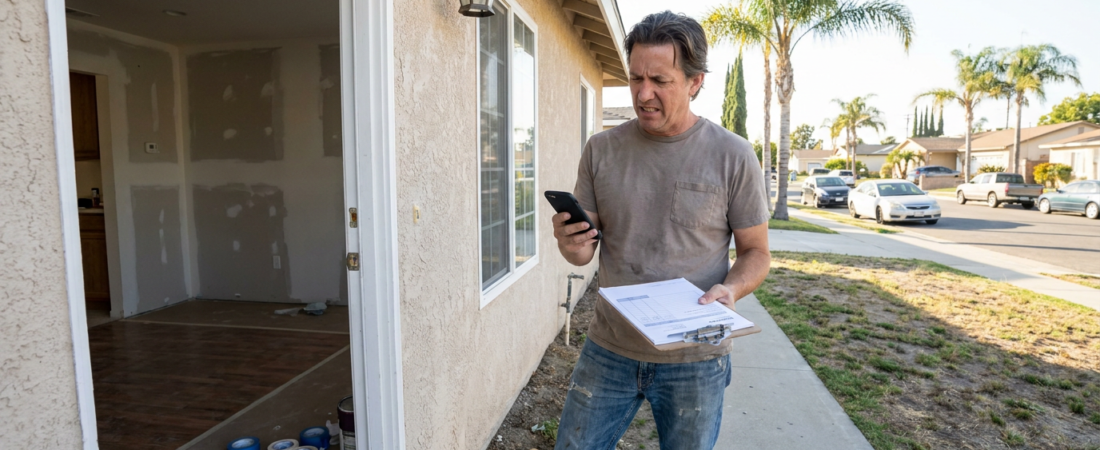
Interesting small claims court cases: the contractor who took the deposit and vanished is a story many California homeowners fear could happen to them. A kitchen repair, bathroom remodel, or simple flooring job starts with a promise, a written estimate, and a deposit. Then the calls stop. The texts go unanswered. The contractor disappears. In this first installment of our ongoing series of interesting small claims court cases, we follow one homeowner’s realistic experience, explain how the claim was prepared, describe what happened in court, and share practical lessons you can use if you are facing a similar problem.
The Story Behind One of Our Interesting Small Claims Court Cases
Maria, a Los Angeles homeowner, hired a contractor to repair water-damaged drywall, replace baseboards, and repaint part of her living room after a plumbing leak. The contractor seemed professional at first. He arrived on time for the estimate, provided a short written proposal, and asked for a deposit to secure materials and reserve the start date.
Maria paid the deposit by check. At first, everything seemed normal. The contractor texted once or twice about scheduling. Then the excuses began. A supplier delay. A family emergency. A truck problem. After two more weeks, the contractor stopped responding completely.
Maria drove by the business address listed on the estimate and found a mailbox store. She checked online reviews and discovered several recent complaints from other customers saying the same thing: deposits collected, no work started, no refund issued.
At that point, Maria was not just frustrated. She was worried she had no practical way to recover her money. Like many people, she assumed court would be too complicated, too expensive, or too time-consuming. But small claims court was designed for disputes exactly like this.
How the Small Claims Case Was Prepared
Before filing, Maria organized every document connected to the job. This step made a major difference. In small claims court, a clear timeline and solid paperwork often matter more than emotion.
Key documents she gathered
- The written estimate or contract showing the scope of work and deposit amount
- A copy of the canceled check proving payment was made
- Text messages and emails showing repeated delays and unanswered follow-ups
- Photos of the unfinished area showing no work had been started
- A demand letter requesting a refund by a specific date
- Business information for the contractor, including name, license details, and address used for service
Maria also created a simple timeline listing the date of the estimate, the date the deposit was paid, the promised start date, each communication attempt, and the deadline in her refund demand letter. That timeline helped present the facts in a way the judge could quickly understand.
Why the demand letter mattered
Although small claims procedures are meant to be accessible, preparation still counts. Maria sent a written demand for repayment before filing. Her letter was polite and direct. It explained the amount paid, stated that no work had been performed, requested a full refund, and gave a deadline to respond.
The contractor never replied. But the letter still helped Maria because it showed the court she made a reasonable effort to resolve the matter before filing suit.
How an LDA Can Help With Small Claims Documents
Many people are comfortable telling their story but feel overwhelmed by court forms, filing details, and service requirements. That is where a California Legal Document Assistant, or LDA, may help.
An LDA can assist with self-help document preparation for people representing themselves. For example, an LDA may help organize information for small claims paperwork, prepare documents at your direction, and help ensure forms are typed clearly and consistently.
Important disclaimer: An LDA is not an attorney, cannot represent you in court, and cannot give legal advice, legal opinions, or tell you what you should do strategically in your case. If you need legal advice, you should consult a licensed California attorney.
For someone like Maria, document assistance can be especially helpful when the challenge is not the facts of the case, but the process of turning those facts into complete, organized paperwork.
Interesting Small Claims Court Cases: What Happened in Court
On the hearing date, Maria arrived early with two copies of everything: one for herself and one for the judge. She also brought the original documents. The contractor appeared, which surprised her.
When the case was called, the judge asked Maria to explain what happened. Because she had prepared a timeline, she gave a calm, short summary:
- The contractor gave a written estimate
- She paid the deposit
- No work was started
- She made repeated attempts to reschedule
- The contractor stopped responding
- She demanded a refund, but none was provided
She then handed the judge the estimate, proof of payment, and printed messages.
The contractor argued that he had intended to do the job and had already spent part of the deposit on materials. The judge asked for receipts. He had none. The judge then asked why no materials had ever been delivered to the property and why there was no documented communication confirming a revised start date. The contractor gave vague answers.
Maria stayed focused on the evidence. She did not interrupt. She did not exaggerate. She simply referred back to the documents.
In the end, the judge ruled in Maria’s favor and awarded her the deposit amount, plus allowable court costs. The judge noted that the evidence showed payment had been made, no work had been performed, and the contractor failed to support his claim that the deposit had been properly used.
Practical Lessons Homeowners Can Learn
This case is relatable because it shows how ordinary people can use small claims court effectively when they prepare carefully. Here are the biggest takeaways.
1. Get everything in writing
Even for a smaller home repair project, insist on a written estimate or contract. It should identify the contractor, describe the work, list the payment terms, and include dates if possible.
2. Keep proof of payment
Pay in a way that creates a record, such as check, card, or another traceable method. Proof of payment is often one of the most important exhibits in court.
3. Save every message
Texts, emails, voicemails, and screenshots can help show promises, delays, and non-responsiveness. Do not assume you will remember the sequence later.
4. Send a clear demand before filing
A concise written demand can sometimes resolve the issue without court. If it does not, it still helps demonstrate that you acted reasonably.
5. Prepare a timeline
Judges hear many cases. A one-page timeline can make your presentation much easier to follow and more persuasive.
6. Focus on facts, not outrage
In small claims court, organized evidence usually carries more weight than anger. Stay calm, respectful, and direct.
Step-by-Step Guidance If a Contractor Took Your Deposit
- Step 1: Gather the estimate, contract, invoice, and proof of payment.
- Step 2: Save all communications, including texts and emails.
- Step 3: Take photos showing the work was not started or not completed.
- Step 4: Send a written demand for refund with a reasonable deadline.
- Step 5: Identify the correct business or individual name for filing and service.
- Step 6: Prepare your small claims forms carefully and completely.
- Step 7: Organize your exhibits in the order you plan to discuss them.
- Step 8: Practice a brief summary of the dispute before the hearing.
Part 1 of an Ongoing Series
This is Part 1 of our series on interesting small claims court cases. Real-world disputes often involve everyday problems: home repairs, unpaid loans, security deposits, damaged property, and broken agreements. By looking at realistic examples, self-represented litigants can better understand what courts tend to focus on and how preparation can make a difference.
We invite you to come back for more cases in this series. Each story will highlight practical lessons, common mistakes, and ways to get your documents in order before your hearing.
Need Help With Small Claims Paperwork?
If you are preparing a California small claims case and need help with document preparation, visit la-legaldocumentassistants.com. We are a registered California Legal Document Assistant service. We can assist with self-help document preparation at your direction. We are not attorneys and cannot give legal advice.