Welcome to Part 3 of our ongoing series on interesting small claims court cases: the botched car repair. Few disputes are more frustrating than paying a repair shop, picking up your car, and realizing the original problem is still there—or worse, that new problems have appeared. This realistic story shows how a California small claims case can unfold when a driver keeps invoices, gets a second written estimate, and presents a clear timeline at the hearing.
At LA Legal Document Assistants, we help self-represented people prepare court documents. We are a registered California Legal Document Assistant service, not attorneys. That means we can provide document preparation services at your direction, but we cannot give legal advice, represent you in court, or tell you what legal strategy to choose.
Part 3 in Our Interesting Small Claims Court Cases Series
In this series, we break down relatable disputes that often end up in small claims court. This third story focuses on a common problem: a car owner who trusted a repair shop, paid the bill, and then discovered the repair was incomplete and possibly negligent.
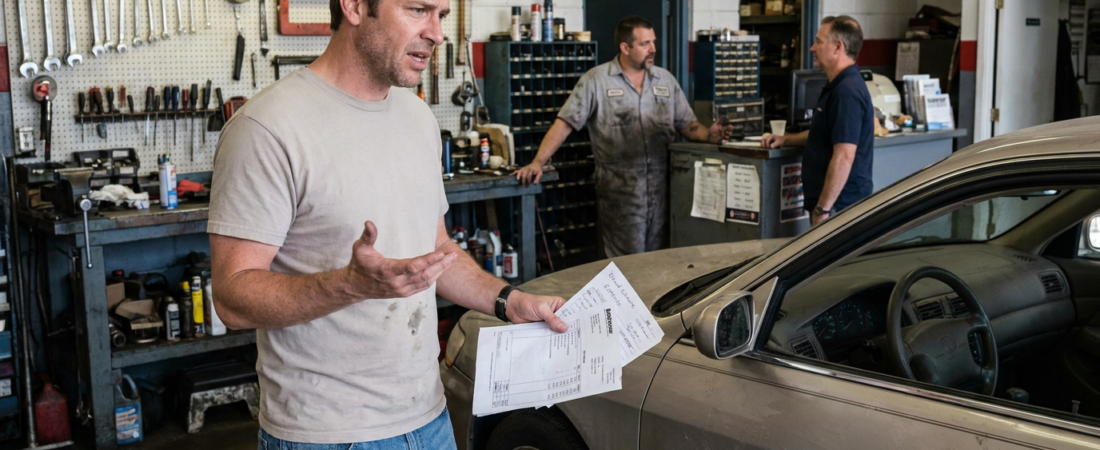
Let’s call the customer Maria. Her sedan had been making a grinding noise and the check engine light had come on. She brought the car to a neighborhood repair shop after seeing positive online reviews. The shop inspected the vehicle and told her she needed brake work, a sensor replacement, and additional labor to fix the issue. Maria approved the work because she needed the car for her commute.
A day later, she paid a bill that was far higher than expected. The invoice listed parts, labor, shop fees, and diagnostic charges. She drove away assuming the problem was solved. But within two days, the grinding noise returned. Then the car began shaking when braking, and a warning light came back on.
Maria called the shop and was told to bring the car back. After another quick look, the shop claimed the new symptoms were unrelated and would require more repairs. That was the moment Maria realized she needed to slow down, gather paperwork, and document everything.
How the Botched Car Repair Dispute Developed
Maria’s situation became a classic small claims dispute because of three things:
- She had proof of payment through invoices and card receipts.
- She sought a second opinion from another licensed repair shop.
- She created a timeline showing what happened before and after the first repair.
The second shop performed a fresh inspection. Its written estimate stated that some of the work billed by the first shop appeared incomplete, and another repair had been performed improperly. The estimate also listed the cost to correct the issues. That second written estimate became one of Maria’s strongest pieces of evidence.
She also gathered:
- The original repair invoice
- Proof of payment
- Text messages and call logs with the first shop
- Photos of dashboard warning lights
- The second shop’s written estimate and notes
- A short written timeline of events
Instead of arguing endlessly with the first shop, Maria sent a written demand asking for reimbursement of the original repair charges and related costs. The shop refused, saying all work had been properly completed. That refusal set the stage for small claims court.
Interesting Small Claims Court Cases: The Botched Car Repair Hearing
At the hearing, the judge was less interested in emotion and more interested in organization. Maria did not need a dramatic presentation. She needed a simple, credible story backed by documents.
What Maria Presented
- The original invoice showing what the first shop said it repaired
- The second estimate identifying incomplete or improper work
- Proof the problems continued almost immediately after the repair
- Her demand letter showing she tried to resolve the issue first
The repair shop argued that cars can develop new problems at any time and that Maria could not prove the first repair caused the later issues. But the timing mattered. So did the paperwork. The second shop’s written estimate did not just say, “more work needed.” It connected the condition of the vehicle to the earlier repair and explained the corrective work required.
That kind of evidence can be persuasive because it gives the judge something concrete to compare against the original invoice.
Why the Documents Mattered
In many small claims cases, the strongest party is not the one who is most upset. It is the one who is best prepared. Maria’s documents helped the judge answer practical questions:
- What was the first shop paid to do?
- What condition was the car in afterward?
- What did the second shop find?
- How much would it cost to fix the problem?
- Did the customer try to resolve the dispute before filing?
Because Maria had organized evidence, the hearing stayed focused. The judge awarded her a portion of the damages she requested, including reimbursement tied to the failed repair and some related costs. She did not recover every dollar she wanted, but she recovered enough to offset the financial hit and move forward with proper repairs.
Lessons From This Small Claims Story
Stories like this are why auto repair disputes appear so often in small claims court. They are also why documentation matters so much. If you are dealing with a similar issue, these lessons can make a major difference.
1. Keep Every Invoice and Receipt
Do not rely on memory. Save written estimates, final invoices, payment confirmations, and any warranty language. If the shop promised certain repairs, your paperwork may be the best proof of that promise.
2. Get a Second Written Estimate
A second shop’s written estimate can help show whether the first repair was incomplete, unnecessary, or improperly performed. Ask for a detailed written statement, not just a verbal opinion.
3. Create a Timeline
Write down dates of inspection, repair, pickup, return visits, warning lights, and conversations. A simple timeline can make your claim easier for a judge to follow.
4. Try to Resolve the Matter First
Before filing, send a clear written demand for payment or correction. Keep a copy. Courts often appreciate seeing that you made a reasonable effort to settle the dispute.
5. Stay Focused on Evidence
In court, avoid exaggeration and stick to facts. Judges want to see what was promised, what was done, what went wrong, and what amount you are seeking.
Step-by-Step Guidance for a California Small Claims Auto Repair Case
- Step 1: Gather invoices, estimates, receipts, photos, and communications.
- Step 2: Obtain a second written estimate or inspection report from another shop.
- Step 3: Prepare a written timeline of events.
- Step 4: Send a demand letter requesting reimbursement or correction.
- Step 5: If the dispute is not resolved, prepare the small claims filing documents.
- Step 6: Organize your exhibits so they are easy to present at the hearing.
- Step 7: Practice explaining your case clearly and briefly.
How a Legal Document Assistant Can Help
If you are pursuing a small claims matter, an LDA can help with the document preparation side of the process. For example, a Legal Document Assistant may help by:
- Typing and preparing court forms at your direction
- Organizing supporting documents for filing
- Preparing a proof of service or other procedural paperwork
- Helping assemble a neat, court-ready packet
Important disclaimer: A Legal Document Assistant is not an attorney and cannot give legal advice, choose your legal arguments, predict your outcome, or represent you in court. If you need legal advice about your rights, defenses, or the value of your claim, you should speak with a licensed California attorney.
Final Takeaway
Among the most interesting small claims court cases: the botched car repair stands out because it is so relatable. People depend on their cars, trust repair professionals, and often feel stuck when expensive work fails. But this kind of dispute can become much easier to present when you keep invoices, get a second written estimate, and show the judge a clean timeline.
If you need help preparing small claims paperwork in California, visit la-legaldocumentassistants.com. LA Legal Document Assistants can help you with document preparation at your direction so you can move forward in a more organized way.