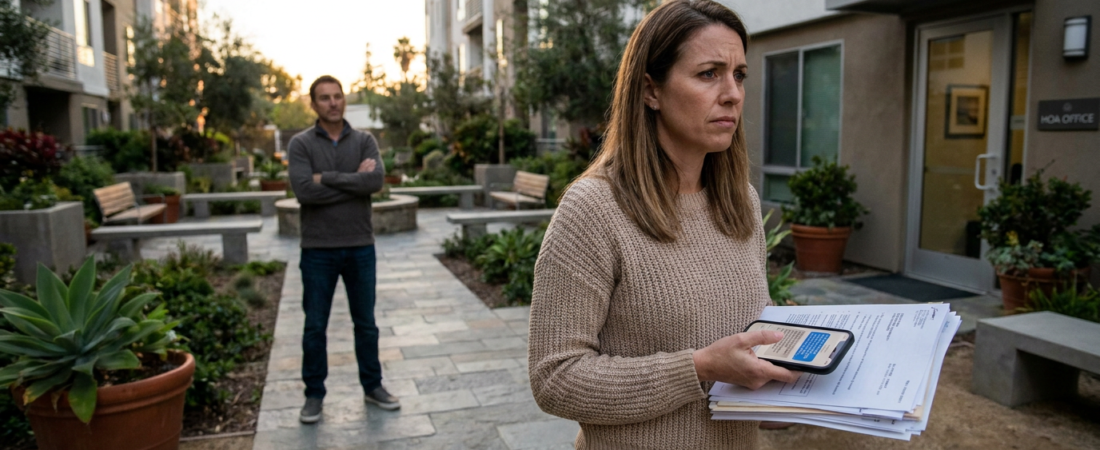
When people search for a civil harassment restraining order California, it is often because a situation that once seemed manageable has become stressful, disruptive, or frightening. Imagine this: Maria bought a condo in Los Angeles and expected the usual neighbor issues—parking complaints, noise, maybe the occasional disagreement. Instead, a dispute over a shared walkway escalated. Her neighbor began shouting at her in the courtyard, sending hostile messages through the HOA app, and once followed her to her car while threatening to “make her regret it.” Maria was not related to him, had never dated him, and did not share a household with him. She needed protection, but she was not sure what kind of court order applied.
For situations like neighbor disputes, problems with ex-friends, roommates who are not close family, or coworkers outside the workplace, a civil harassment restraining order may be the right path. Below is a practical guide to how the process works in California, what forms are involved, what evidence helps, and how a Legal Document Assistant can help prepare the paperwork.
What Is a Civil Harassment Restraining Order in California?
A civil harassment restraining order California case is used when someone is being harassed, threatened, stalked, or subjected to violence by a person who is not a close family member or intimate partner. These cases often involve:
- Neighbors
- Former friends
- Roommates in some situations
- Coworkers outside of employer-filed workplace violence cases
- Acquaintances
- Other non-family, non-dating relationships
In Maria’s case, the court process she likely needed was civil harassment, not domestic violence, because the other person was a neighbor rather than a spouse, ex, dating partner, parent, child, or other protected domestic relationship.
Civil Harassment vs. Domestic Violence Restraining Orders
This distinction matters because California has different restraining order categories.
Civil Harassment Restraining Orders
Generally used for disputes involving people such as:
- Neighbors
- Ex-friends
- Roommates who are not close family or dating partners
- Coworkers
- Acquaintances
Domestic Violence Restraining Orders
Generally used when the restrained person is:
- A spouse or former spouse
- A person you dated or were engaged to
- The other parent of your child
- A close family member
- A person you live with or used to live with in an intimate or domestic context
If the relationship falls into the domestic category, the domestic violence restraining order process may apply instead. Choosing the correct type of case is important because the forms, legal standards, and court procedures can differ.
Who Qualifies for a Civil Harassment Restraining Order?
California courts may issue a civil harassment restraining order when a person has suffered harassment, unlawful violence, a credible threat of violence, or a course of conduct that seriously alarms, annoys, or harasses and serves no legitimate purpose.
Examples that may support a request include:
- Threatening texts, emails, or voicemails
- Repeated unwanted contact
- Following or stalking
- Property vandalism tied to intimidation
- Physical assault or attempted assault
- Repeated confrontations that cause substantial emotional distress
Not every rude interaction qualifies. Courts usually look for serious behavior, repeated conduct, credible threats, or violence. In Maria’s story, the pattern of threats, aggressive confrontations, and being followed could be important facts in support of her request.
Step 1: Filing the CH-100 Request
The process usually begins with the CH-100 Request for Civil Harassment Restraining Orders. This is the main form where the person asking for protection explains what happened and what orders they want the court to make.
The request may ask for orders such as:
- No contact
- Stay-away orders
- Orders not to harass, threaten, stalk, or disturb the peace
- Other related relief allowed by the court
When completing the CH-100, details matter. Dates, locations, specific statements, and a clear timeline can help the judge understand the seriousness of the situation. Instead of writing “my neighbor harassed me,” it is usually more effective to describe incidents specifically, such as what was said, when it happened, whether there were witnesses, and how often it occurred.
A Legal Document Assistant can help organize and prepare these forms based on the client’s information. An LDA is not an attorney, cannot give legal advice, cannot tell you what you should say, and cannot represent you in court. However, an LDA can assist with typing, formatting, assembling, and filing legal documents at your direction.
Step 2: Requesting a Temporary Restraining Order
Along with the main request, the person filing may ask for a temporary restraining order, often called a TRO. This is a short-term order the judge may review quickly, sometimes without the other side present, to decide whether immediate protection is appropriate until the hearing date.
If granted, a temporary order can require the other person to:
- Stay away from you, your home, your job, or your vehicle
- Stop contacting you
- Stop harassment, threats, stalking, or violence
The court will also set a hearing date where both sides can appear. A temporary order does not end the case; it is only an interim step before the full hearing.
For someone like Maria, this temporary protection may provide immediate breathing room while the court process moves forward.
Step 3: Service of the Court Papers
After filing, the restrained person must usually be formally served with the filed documents, including the request, any temporary orders, and the hearing notice. Service is a critical step. If service is not done correctly and on time, the hearing may be delayed.
Important points about service often include:
- The petitioner usually cannot personally serve the papers
- Service is often done by a non-party adult, sheriff, or registered process server
- Proof of service must be completed and filed
This step ensures the other person has notice and an opportunity to respond. In practice, proper service is one of the most common procedural issues in restraining order cases.
Step 4: Preparing for the Hearing
The hearing is where the judge decides whether to issue longer-term orders. This is the stage where evidence becomes especially important.
What Evidence Helps?
Helpful evidence may include:
- Text messages, emails, direct messages, or voicemail transcripts
- Photos of injuries or property damage
- Security camera footage
- Police reports
- Medical records, if relevant
- Witness statements or witnesses who can appear
- A written timeline of incidents
- Copies of prior complaints to an HOA, landlord, or employer
Maria, for example, might bring screenshots of the HOA messages, video from a doorbell camera, and testimony from another resident who heard the threats in the courtyard.
Practical Hearing Tips
- Organize events in date order
- Bring copies of all exhibits
- Focus on facts, not insults
- Be ready to explain why you fear future harm or harassment
- Arrive early and dress neatly
The judge may ask questions about what happened, whether the conduct was repeated, and what protection is needed.
What Happens at the Hearing?
At the hearing, both sides may have a chance to speak. The restrained person can agree, oppose, or present their own evidence. After reviewing the forms and hearing testimony, the judge may:
- Grant the restraining order
- Deny the request
- Modify the requested orders
- Continue the hearing in some circumstances
If granted, the restraining order may remain in effect for a period set by the court under California law. The exact terms depend on the facts of the case and the judge’s findings.
How a Legal Document Assistant Helps
For many people, the hardest part is not telling the story—it is turning that story into properly prepared court forms. A registered California Legal Document Assistant can help with document support such as:
- Preparing the CH-100 and related forms at your direction
- Formatting attachments and incident timelines
- Helping assemble filing packets
- Assisting with filing and document organization
- Helping ensure paperwork is complete before submission
Important disclaimer: A Legal Document Assistant is not an attorney, does not provide legal advice, does not choose legal strategy, and does not represent clients in court. If you need legal advice about whether you qualify, what evidence is strongest, or how to argue your case, you should speak with a licensed California attorney.
Final Thoughts on the Civil Harassment Process
Maria’s story is common: a conflict with someone outside the family or dating context becomes serious enough that boundaries, requests, and informal complaints no longer work. When harassment escalates into threats, stalking, repeated intimidation, or violence, the court process may offer protection.
The key steps are straightforward in concept but important in detail: determine whether civil harassment is the correct category, prepare the CH-100 request carefully, seek a temporary order if needed, complete proper service, and bring strong evidence to the hearing.
If you need help preparing documents for a civil harassment restraining order California matter, visit la-legaldocumentassistants.com. We provide professional legal document preparation support for self-represented individuals in California.