How to Prepare a Quit Claim Deed in California
If you are searching for how to prepare a quit claim deed in California, you are likely trying to transfer title as efficiently as possible while making sure the paperwork is accepted for recording. In California, a quitclaim deed can be used to transfer whatever ownership interest a person currently has in real property, but the document must still be prepared carefully and submitted with the correct supporting forms and county-specific recording requirements.
For many people, the challenge is not just drafting the deed itself. The bigger issue is assembling a complete recording package, using the correct vesting language provided by the client, identifying the correct parties, and including forms such as the Preliminary Change of Ownership Report, often called the PCOR. A mistake in any of these areas can delay recording or create problems that require correction later.
A California Legal Document Assistant, or LDA, can help with document preparation services for individuals who know what they want filed and need assistance preparing paperwork at their direction. An LDA is a non-attorney. That means an LDA can prepare legal documents based on information and instructions provided by the client, but cannot give legal advice, choose legal strategy, or tell a client what kind of deed they should use. If you need advice about ownership rights, tax consequences, transfer strategy, estate planning, or whether a quitclaim deed is appropriate, you should consult a qualified California attorney.
What Is a Quit Claim Deed in California?
A quitclaim deed is a deed by which the grantor transfers to the grantee whatever interest the grantor presently has in the property, if any, without warranties of title. In practical terms, that means the signer is not promising that they own clear title or even that they own any interest at all. They are simply transferring whatever rights they may have.
People often search for how to prepare a quit claim deed in California when dealing with situations such as:
- Transfers between family members
- Adding or removing a spouse from title
- Transfers following marriage or divorce
- Placing property into or out of a trust
- Correcting a title issue or clarifying ownership records
- Gifting an ownership interest
Even when the transfer seems simple, the deed still becomes part of the public land records. That is why accuracy matters. The names of the parties, property description, assessor parcel number if required by the county, documentary transfer tax statements, and exemption language all need to be handled correctly according to the client’s instructions and the recorder’s standards.
Why People Need Help With How to Prepare a Quit Claim Deed in California
Many online templates make deed preparation look easy. In reality, California recording requirements can be technical. Counties may reject documents for formatting issues, missing information, omitted signatures, incomplete tax declarations, or absent cover forms. In addition, the deed itself is only one part of the process.
Common reasons people seek professional document preparation help include:
- They want the deed prepared clearly for recording
- They are unsure which supporting forms are needed
- They want to avoid recorder rejection for technical defects
- They need help organizing a recording-ready package
- They want a non-attorney document preparation option rather than full legal representation
This is where an LDA can be helpful. A California Legal Document Assistant can prepare the deed and related filing documents at the client’s direction, helping the client move forward with a properly assembled package without stepping into legal advice.
How a California Legal Document Assistant Helps Prepare a Quitclaim Deed
When people ask how to prepare a quit claim deed in California, they often need practical support with the paperwork. A California LDA can assist with document preparation tasks such as:
- Typing and formatting the quitclaim deed based on the client’s instructions
- Entering the legal names of the grantor and grantee as provided by the client
- Including the property’s legal description from an existing deed or client-supplied source
- Preparing the deed’s return mailing and recorder information sections
- Including documentary transfer tax statements or exemption language as directed
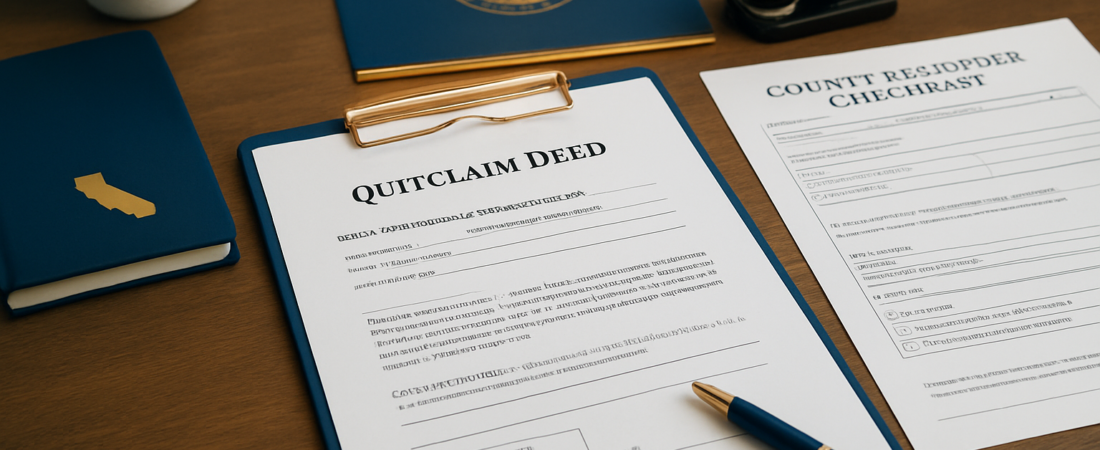
- Preparing the Preliminary Change of Ownership Report when required
- Reviewing county recorder formatting requirements for margins, page size, and legibility
- Organizing the deed package for signature, notarization, and recording
These services are administrative and document-preparation based. They can save time and reduce avoidable filing errors. However, an LDA cannot tell you whether a quitclaim deed is the best instrument for your goals, whether a transfer may affect taxes, whether title should be held as community property or joint tenancy, or whether a transfer may trigger reassessment or legal consequences. Those are legal questions for an attorney and, in some cases, tax questions for a CPA or tax professional.
Important Disclaimer About LDA Services
A California Legal Document Assistant is a non-attorney. An LDA may prepare documents at the client’s direction, but cannot provide legal advice, represent clients in court, select legal remedies, or advise clients on their rights or the legal effect of signing a deed. If you have questions about which deed to use, whether the transfer is legally appropriate, how title should be held, whether there are creditor or estate planning consequences, or whether the transfer affects taxes or reassessment, you should consult a licensed California attorney.
Key Information Needed to Prepare a Quit Claim Deed in California
Before the deed can be prepared, the client typically needs to provide accurate information. If you are trying to understand how to prepare a quit claim deed in California, expect to gather the following:
- Full legal name of the grantor
- Full legal name of the grantee
- The manner in which title will be held, if the client already knows and directs it
- The property address
- The legal description of the property
- Assessor’s Parcel Number, if available
- Return address after recording
- Transfer tax information or exemption statement as applicable
- Any applicable city transfer tax information in counties or cities where relevant
- Signature and notarization requirements for the grantor
The legal description is especially important. The street address alone is not enough. A California deed usually requires the full legal description taken from a prior recorded deed or another reliable source supplied by the client. If the legal description is inaccurate or incomplete, the recorder may reject the document or the recorded deed may not properly reflect the intended property.
Step-by-Step Overview of How to Prepare a Quit Claim Deed in California
- Confirm the client’s instructions. The person requesting preparation must direct what document is to be prepared and what information should appear in it.
- Obtain the existing property information. This often includes the prior deed, legal description, parcel number, and ownership details.
- Draft the quitclaim deed. The deed is prepared using the client-provided names, property description, and transfer details.
- Include required tax and exemption statements. California deeds often include documentary transfer tax language or exemption wording based on the client’s direction and facts provided.
- Prepare the PCOR if required. A Preliminary Change of Ownership Report is commonly submitted with the deed when recording.
- Check county recorder formatting rules. Margin size, page layout, and legibility standards can affect acceptance.
- Arrange for notarization. The grantor’s signature generally must be notarized before recording.
- Submit the recording package. The deed and supporting forms are submitted to the appropriate county recorder with applicable fees.
While these steps sound straightforward, many rejected deeds result from small technical mistakes. That is why people often seek help from a California Legal Document Assistant for document preparation support.
The Preliminary Change of Ownership Report and Why It Matters
One of the most overlooked parts of how to prepare a quit claim deed in California is the Preliminary Change of Ownership Report. In many California counties, the PCOR is submitted at the time of recording when real property changes ownership. This form provides information to the county assessor about the transfer.
If the PCOR is missing, the county may still record the deed in some circumstances, but additional fees or follow-up issues may apply depending on local practice. More importantly, an incomplete or inaccurate PCOR can create delays or confusion in the assessor’s review of the transfer.
A document preparation service can help ensure the PCOR is completed based on the client’s provided information and included with the recording package. However, whether a transfer qualifies for a reassessment exclusion or another tax-related treatment can involve legal or tax analysis, which is outside the scope of LDA services. For that type of advice, clients should speak with an attorney or tax professional.
County Recorder Requirements Can Vary
Another reason people search for how to prepare a quit claim deed in California is that recorder requirements are not always identical from one county to another. California recorders generally follow statewide rules, but local practices, fee schedules, cover sheet preferences, and submission procedures can vary.
Common county recording issues include:
- Insufficient top margin space on the first page
- Illegible text or poor print quality
- Missing notary acknowledgment
- Incorrect or missing return address
- Omitted parcel number where requested
- Missing transfer tax declaration
- Failure to include the PCOR
- Incorrect recording fees
An LDA can help review practical recording-package details so the paperwork is more likely to be accepted when submitted. That kind of administrative support can be especially valuable when the client wants a deed prepared correctly for recording without hiring a full-service law firm for a routine document preparation matter.
Common Mistakes in DIY Quitclaim Deed Preparation
Do-it-yourself deed preparation often leads to preventable errors. Some of the most common include:
- Using the wrong deed form for the intended transfer
- Misspelling names or using inconsistent names
- Leaving out part of the legal description
- Using only the property address instead of the legal description
- Failing to include transfer tax information
- Not preparing the PCOR
- Signing before notarization is properly arranged
- Ignoring county formatting requirements
- Assuming recording alone resolves legal ownership questions
These mistakes are exactly why many property owners look for support with how to prepare a quit claim deed in California. A California LDA can help prepare and organize the paperwork at the client’s direction, reducing the risk of technical filing problems while staying within the lawful scope of non-attorney services.
LDA vs. Attorney vs. DIY: Which Option Fits Your Situation?
Using an LDA
An LDA may be a practical option when you already know you want a quitclaim deed prepared and need help with the paperwork, formatting, and recording package. This can be cost-effective for straightforward document preparation matters.
Hiring an Attorney
An attorney is the right choice when you need legal advice. For example, if you are unsure whether a quitclaim deed is appropriate, have concerns about title defects, want advice about community property or trust transfers, or need guidance on tax or estate planning consequences, you should consult a lawyer.
Doing It Yourself
DIY filing may work for some people, but it carries the greatest risk of errors. A recorded deed affects real property records, so mistakes can have lasting consequences. Many people begin with a DIY approach and then seek help after encountering confusion about forms, wording, or county recording requirements.
When Legal Advice Is Especially Important
Although this article explains how to prepare a quit claim deed in California from a document preparation perspective, some situations require legal review before anything is signed. Consider speaking with an attorney if:
- You are transferring property during divorce or separation
- The property is part of a probate or trust matter
- There are existing liens or title disputes
- You are unsure whether the grantor actually holds title
- You want to know the effect of the transfer on taxes or reassessment
- You are adding someone to title and want to understand ownership rights
- You are concerned about creditor, inheritance, or gift implications
An LDA cannot answer those legal questions. A non-attorney document preparer can only prepare the requested documents based on your instructions.
How to Prepare a Quit Claim Deed in California the Smarter Way
The smartest approach is often to separate legal advice from document preparation. If you already know what transfer you want and simply need the paperwork prepared for recording, an LDA can help organize the process efficiently. If you do not know what type of deed or transfer structure you need, start with an attorney.
For many clients, the value of an LDA is practical: clear preparation, attention to recording details, and assistance assembling a recording-ready package. That can include the deed, the PCOR, and related filing information needed for the county recorder. This support can help avoid delays caused by incomplete or improperly prepared paperwork.
Final Thoughts
Understanding how to prepare a quit claim deed in California means more than filling in a form. It involves accurate deed drafting at the client’s direction, proper legal description handling, attention to transfer tax statements, preparation of the Preliminary Change of Ownership Report when required, and compliance with county recorder requirements.
A California Legal Document Assistant can provide valuable non-attorney document preparation services for clients who know what they want filed and need help getting the paperwork ready for recording. That said, an LDA cannot provide legal advice. If you have questions about your rights, the best type of deed, title consequences, tax issues, or whether a transfer is legally advisable, consult a qualified California attorney before proceeding.
If you need practical help with deed paperwork, recording-package preparation, and California filing requirements, working with a knowledgeable LDA can be an efficient way to move your quitclaim deed toward recording with greater confidence and fewer administrative obstacles.