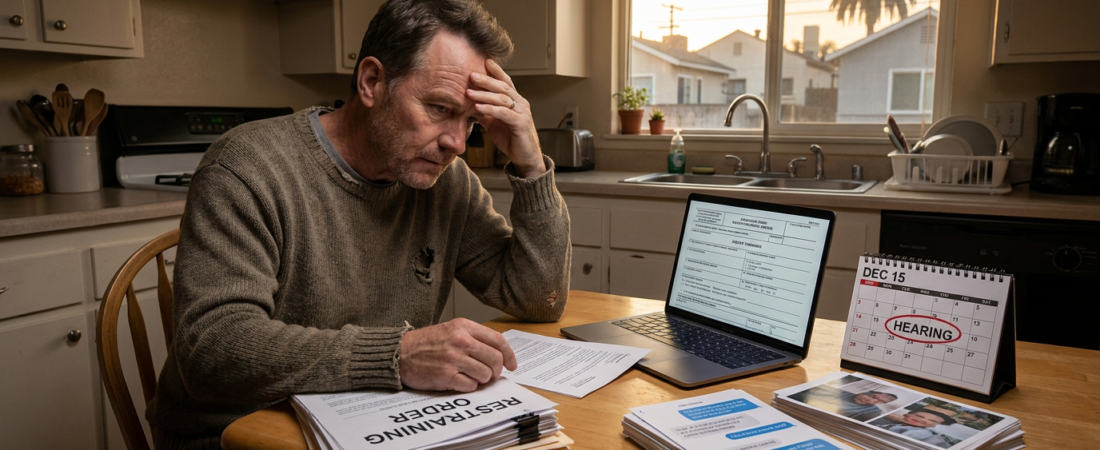
When people search for how to respond to a restraining order, they are usually not calm, prepared, or thinking clearly. They are scared, embarrassed, and worried about what happens next. That was true for “Daniel,” a working father in Los Angeles who came home one evening, opened his door to a process server, and suddenly found himself holding a packet of court papers requesting a restraining order against him.
Daniel’s first reaction was panic. He saw a hearing date, pages of allegations, and a temporary order telling him what he could and could not do before he even had a chance to speak in court. He wanted to defend himself, but he did not know which form to use, how fast he needed to act, or what evidence mattered. Like many people served with restraining order papers, he discovered that most online information focuses on the person filing the request—not the person who needs to respond.
If you are in that position, take a breath. Being served does not mean the judge has already heard your side. It does mean you need to act quickly, follow any temporary orders immediately, and get your response documents prepared before the hearing.
How to Respond to a Restraining Order: First Steps Matter
The first thing to understand is that there are different types of restraining orders in California, including civil harassment, domestic violence, elder abuse, workplace violence, and others. The response form depends on the type of case. For a civil harassment restraining order, the response is commonly Form CH-120, called the Response to Request for Civil Harassment Restraining Orders.
Daniel’s paperwork was for a civil harassment case, so his response needed to match that case type. He almost made the mistake of downloading the wrong form online, which could have delayed everything.
Here are the first steps after you are served:
- Read every page carefully. Look for the hearing date, department, courthouse address, and any temporary restraining order already in effect.
- Identify the case type. Your forms will usually show whether it is civil harassment, domestic violence, or another category.
- Do not ignore the papers. If you do nothing, the judge may issue longer-term orders without your written response.
- Follow all temporary orders immediately. Even if you disagree with the allegations, violating a temporary order can create serious legal problems.
Do You Have to Obey the Temporary Restraining Order Before the Hearing?
Yes. This is one of the most important parts of how to respond to a restraining order. If the court issued a temporary restraining order, you must obey it until the hearing or until the court changes it.
Daniel was upset because the temporary order restricted contact with the other person and required distance from certain places. He wanted to text and “clear things up,” but that would have been a mistake. The safer choice was to stop all prohibited contact and focus on preparing for court.
Temporary orders may include:
- No contact by phone, text, email, social media, or through other people
- Stay-away orders from a person, home, workplace, school, or vehicle
- Orders about firearms or ammunition
- Other conduct restrictions listed in the paperwork
Even if the allegations are false or exaggerated, do not violate the order while waiting for the hearing.
Deadlines Before the Hearing
One reason people feel overwhelmed is the short timeline. In many restraining order cases, the hearing is scheduled quickly. That means your response needs to be prepared and filed as soon as possible, and in some cases served on the other side before the hearing as required by the court rules or instructions in your packet.
Daniel thought he had “plenty of time” because the hearing was two weeks away. But once he started gathering text messages, call logs, witness names, and work records, he realized how fast those days disappeared.
Important timing points include:
- Check the hearing date immediately. Count backward and do not wait until the last minute.
- Prepare your response form early. Courts may have filing cutoffs, and you may need time to make copies and arrange service if required.
- Review local court instructions. Some counties may have specific procedures for filing or remote appearances.
- Bring organized evidence to the hearing. Written responses help, but preparation for the hearing matters too.
If you are unsure what documents are required for your case type, getting document preparation help quickly can reduce costly errors.
The Response Form: What Goes Into CH-120?
For a civil harassment case, CH-120 is the main response form. It gives you a chance to admit, deny, or explain the allegations and tell the court what orders you agree with or oppose.
Daniel used his response to clearly deny specific claims, explain the context of certain communications, and state that he wanted the court to deny the requested orders. He also made sure his response matched the facts he could support with evidence.
Typical parts of a response may include:
- Your identifying case information
- Your response to the requested restraining orders
- Your explanation of events
- Any disagreement with the statements made in the request
- Information about firearms, if applicable
- Requests about costs or other relief, depending on the form
Keep your statements factual, specific, and calm. Avoid emotional attacks. Judges often respond better to organized facts than to anger.
What Evidence Should You Gather?
Daniel’s strongest step was not arguing—it was organizing proof. If you are responding to a restraining order request, evidence may help the judge understand the full picture.
Useful evidence can include:
- Text messages, emails, or direct messages
- Photos, videos, or screenshots
- Call logs or voicemail records
- Witness statements or witness contact information
- Receipts, work schedules, GPS records, or other timeline evidence
- Prior police reports or incident reports, if relevant
Arrange your evidence in chronological order if possible. Make it easy to follow. If there are multiple incidents mentioned in the request, gather documents that address each one.
What a Legal Document Assistant Can and Cannot Do
Many people served with restraining order papers need help fast, especially when they are trying to understand forms, filing steps, and deadlines. A California Legal Document Assistant (LDA) can help by preparing legal documents at your direction, typing forms properly, organizing paperwork, and helping you move through the filing process more efficiently.
For someone like Daniel, that kind of support can make a major difference when time is short and stress is high.
Important disclaimer: A Legal Document Assistant is not an attorney and cannot give legal advice, represent you in court, tell you what strategy to use, or advise you on what you should say legally in your case. An LDA can provide self-help document preparation services based on the information you provide.
An LDA may help with tasks such as:
- Preparing response forms such as CH-120 at your direction
- Formatting attachments and declarations
- Helping organize filing packets
- Providing procedural information about filing and service steps
- Reducing paperwork errors that can happen when you are rushed
What Happens at the Hearing?
Many people think the written response is the end of the process. It is not. The hearing is where the judge decides whether to grant, change, or deny the requested restraining orders.
At Daniel’s hearing, both sides had a chance to speak. The judge reviewed the filed papers, asked questions, and looked at the evidence each side brought. Because Daniel had responded on time, followed the temporary order, and brought organized documents, he was in a much better position than he would have been if he had ignored the case.
At the hearing, expect:
- The judge to call the case and identify both parties
- The requesting party to explain why they want the restraining order
- You to have a chance to respond
- The judge to review documents, photos, messages, or witness testimony if allowed
- A decision the same day or shortly after, depending on the court
Bring copies of your paperwork and evidence. Arrive early. Dress neatly. Stay respectful, even if the other side says things you strongly disagree with.
Step-by-Step Summary for Responding
- Read the served papers immediately.
- Identify the restraining order type and the correct response form, such as CH-120 for civil harassment.
- Follow any temporary restraining order until the hearing.
- Calendar the hearing date and act quickly.
- Prepare your response with clear factual statements.
- Gather and organize evidence.
- File and serve documents as required.
- Appear at the hearing with copies and supporting materials.
If you are feeling overwhelmed, that is normal. The key is not to freeze. Responding promptly and carefully can help you protect your side of the story.
If you need fast, professional document preparation support, visit la-legaldocumentassistants.com. We are a registered California Legal Document Assistant service that helps self-represented individuals prepare court documents efficiently. We are not attorneys and cannot give legal advice, but we can help you get your paperwork prepared and organized when time matters.