Living Trust vs Will in California Document Preparation Service: Understanding the Difference
When California residents start planning for the future, one of the most common questions is whether they need a living trust, a will, or both. People often search for a living trust vs will in California document preparation service because they want an efficient, cost-conscious way to get paperwork prepared while still understanding the practical differences between these estate planning tools.
A living trust and a will can each play an important role in an estate plan, but they do different things. In many California households, a trust-based plan is used to help manage property during life and after death, while a will may be used alongside the trust to address assets not placed into the trust and to name guardians for minor children. At the same time, some individuals choose a simpler will-based plan depending on their circumstances.
For consumers exploring a living trust vs will in California document preparation service, it is also important to understand what a California Legal Document Assistant, or LDA, does. An LDA is a non-attorney who can prepare legal documents at a client’s specific direction. An LDA can help organize execution-ready paperwork and assist with filing or recording steps where applicable, but cannot give legal advice, recommend which estate plan the client should choose, or advise on legal rights, remedies, or strategies.
Important disclaimer: A California Legal Document Assistant is not a lawyer and cannot provide legal advice. An LDA may prepare documents at your direction based on your choices and information. If you have questions about which estate planning option is best for you, your legal rights, tax consequences, probate exposure, community property issues, blended family concerns, creditor issues, incapacity planning, or how California law applies to your situation, you should consult a licensed California attorney.
What Is a Will in California?
A will, often called a last will and testament, is a written document that states how a person wants certain matters handled after death. In California, a will is commonly used to name beneficiaries, nominate an executor, and nominate guardians for minor children. A will only becomes effective at death and generally does not control assets during the person’s lifetime.
Many people looking into a living trust vs will in California document preparation service are surprised to learn that a will usually does not avoid probate by itself. Probate is the court-supervised process for administering a deceased person’s estate. Whether probate is required depends on the nature and value of the assets and how title is held at death.
Common reasons California consumers use a will
- To name who should receive personal property or other assets at death
- To nominate an executor to handle estate administration
- To nominate a guardian for minor children
- To create a straightforward estate plan where a trust is not being used
- To serve as a backup document in a trust-based plan
What a will does not do by itself
- It does not manage assets during incapacity
- It does not automatically avoid probate
- It does not transfer assets already passing by beneficiary designation or joint ownership terms
- It does not retitle property into a trust
What Is a Living Trust in California?
A living trust, often called a revocable living trust, is a document commonly used to hold and manage assets during life and direct distribution after death. The person creating the trust is often the initial trustee and beneficiary during life, with a successor trustee named to step in later if needed.
In a typical California trust-based plan, the trust document is only part of the process. The trust must also be funded, meaning selected assets are transferred into the trust or aligned with the trust plan where appropriate. This is one reason many consumers compare a living trust vs will in California document preparation service rather than just comparing documents in the abstract. Preparation is not only about drafting forms; it often includes assembling supporting transfer documents and execution-ready paperwork.
Common reasons California consumers use a living trust
- To hold title to real property in the trust
- To provide a management structure if the trust creator becomes incapacitated
- To organize distribution instructions after death
- To help keep certain assets out of probate when properly transferred to the trust
- To create a central framework for managing multiple assets
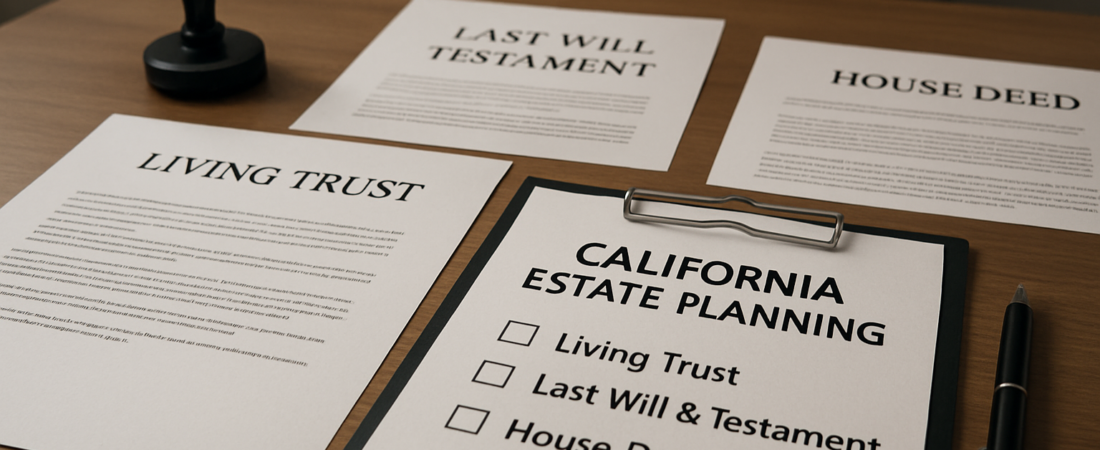
Common documents often used with a living trust
- Certification or abstract of trust
- Pour-over will
- Durable power of attorney
- Advance health care directive
- Deeds transferring California real property into the trust, where applicable
- Assignment documents for certain personal property, where applicable
Living Trust vs Will in California Document Preparation Service: When People Commonly Need a Will
Consumers often evaluate a living trust vs will in California document preparation service when they want practical guidance about which type of paperwork is commonly used in everyday situations. While an LDA cannot recommend which option you should choose, it is helpful to understand the scenarios in which California consumers frequently select a will-based plan.
A will is often chosen by individuals who want to name beneficiaries and an executor, but who are not setting up a trust-based plan. It is also commonly used by parents who want to nominate guardians for minor children. In addition, even when a trust is used, a separate will is often part of the overall package.
Situations where a will is commonly part of the plan
- A single person wants to name who receives assets at death
- A married person wants a written statement of who should inherit certain property
- Parents of minor children want to nominate guardians
- A person wants to name an executor to handle final affairs
- A trust is not being created, but the person still wants formal written instructions
Because California estate administration can involve probate depending on the assets involved, consumers with legal questions about whether a will-only plan fits their needs should speak with a licensed attorney. An LDA cannot advise whether probate would apply in a specific case or whether a will is legally preferable to a trust for any individual.
Living Trust vs Will in California Document Preparation Service: When People Commonly Need a Living Trust
Many California residents look for a living trust vs will in California document preparation service because they own a home, have multiple assets, or want a more organized plan for management during life and after death. A living trust is commonly selected when a person wants to place certain assets into a trust and name a successor trustee to manage those assets later.
In California, real property ownership is one of the most common reasons consumers consider a living trust. If a client has already decided to use a trust, an LDA may prepare client-selected trust documents and related transfer paperwork at the client’s direction, including execution-ready deed packages where applicable.
Situations where a living trust is commonly part of the plan
- A homeowner wants title to California real property held in a trust
- A person wants a successor trustee named to manage trust assets
- A family wants a more structured estate planning package
- A person wants trust-centered instructions for handling assets after death
- An individual wants supporting estate planning documents prepared together as one package
However, whether a trust is the right choice for a particular person is a legal question. An LDA cannot tell a client whether a trust is better than a will, whether a trust will avoid probate in the client’s situation, or whether certain assets should or should not be transferred into the trust. Those questions should be directed to a California attorney.
When California Consumers Commonly Need Both a Living Trust and a Will
In many estate plans, the comparison is not really trust versus will as an either-or decision. Instead, many California consumers use both. That is why the phrase living trust vs will in California document preparation service can be somewhat misleading. A trust-based plan often includes a will, usually in the form of a pour-over will, as a companion document.
A pour-over will is commonly used to direct that certain assets not already titled in the trust be distributed to the trust through the estate process, subject to applicable law. Parents may also want a will because a trust does not generally serve the same function as a will for guardian nominations of minor children.
Reasons both documents are commonly used together
- The trust serves as the main management and distribution document
- The will acts as a backup for assets outside the trust
- The will may include guardian nominations for minor children
- The combined package can create a more complete set of estate planning paperwork
If a client has already chosen a trust-centered plan, an LDA can prepare the client-selected trust and companion will documents at the client’s direction. But the LDA cannot decide for the client whether both documents are necessary or explain the legal effect of one strategy over another.
How a California Legal Document Assistant Helps with Estate Planning Document Preparation
For consumers seeking a living trust vs will in California document preparation service, understanding the role of an LDA is essential. A California Legal Document Assistant offers document preparation services directly to self-represented consumers. In the estate planning context, that means the LDA can prepare forms and documents selected by the client, using information provided by the client, without giving legal advice.
What an LDA may do at the client’s direction
- Prepare client-selected living trust documents
- Prepare client-selected wills, including companion wills for trust packages
- Prepare powers of attorney and advance health care directives selected by the client
- Organize signature-ready and execution-ready document packets
- Prepare deeds and related transfer documents for California real property, where applicable and at the client’s direction
- Assist with filing or recording steps where applicable, such as deed recording procedures
- Arrange documents in a logical package for signing, notarization, witnessing, and safekeeping
What an LDA may not do
- Give legal advice
- Recommend whether you should choose a living trust, a will, or both
- Advise you about your legal rights or obligations
- Interpret California law for your specific situation
- Tell you whether your estate will avoid probate
- Advise on tax consequences or asset protection issues
- Represent you in court
This distinction matters. Consumers often begin searching for a living trust vs will in California document preparation service because they want both affordability and clarity. An LDA can help with the preparation side of the process, but legal strategy must come from the client’s own decision-making or from advice provided by a licensed attorney.
Execution-Ready Paperwork and California Signing Steps
One practical benefit of using a document preparation service is receiving organized, execution-ready paperwork. Estate planning documents are only useful if they are properly completed and signed according to applicable requirements. While an LDA cannot advise on legal sufficiency beyond document preparation at the client’s direction, the LDA can help organize the packet so the client can complete the selected paperwork more efficiently.
Execution steps commonly involved in California estate planning packets
- Client selects the type of documents to be prepared
- Client provides names, addresses, asset details, and distribution instructions
- LDA prepares the selected documents at the client’s direction
- Documents are assembled into a signing packet
- Client reviews the prepared documents for accuracy
- Signing, notarization, and witnessing are completed as applicable
- Supporting transfer documents are signed and submitted or recorded where applicable
- Final copies are organized for safekeeping and future reference
For trust-based plans, execution may also include deeds transferring real property into the trust. Recording steps can be especially important with California real estate. If the client has chosen to transfer title to a trust, an LDA may help prepare and organize the deed package and assist with recording procedures where applicable. The LDA cannot, however, advise whether transferring a particular property is legally advisable.
Questions Consumers Commonly Ask When Comparing a Living Trust and a Will
Is a living trust always better than a will?
No one-size-fits-all answer exists. This is a legal question, and an LDA cannot advise you which choice is better for your situation. If you need a recommendation, consult a California attorney.
Can I have both a living trust and a will?
Yes, many California consumers use both. A trust-based plan commonly includes a companion will. Whether that approach is appropriate for you is a legal question for an attorney.
Can an LDA tell me whether I need probate?
No. An LDA cannot advise whether probate applies to your estate or whether a trust would avoid probate in your case.
Can an LDA prepare trust transfer documents?
Yes, if you have chosen that service and provide the necessary information and direction, an LDA may prepare related documents such as deeds and organize paperwork for filing or recording where applicable.
Can an LDA explain my legal rights?
No. A California Legal Document Assistant is a non-attorney and cannot advise you about legal rights, remedies, or strategies.
Choosing a Living Trust vs Will in California Document Preparation Service
If you are comparing a living trust vs will in California document preparation service, your first step is to identify what you want prepared. Some clients already know they want a living trust package. Others know they want a will. Still others want both prepared as part of a broader estate planning set.
Once you have made your own document selection, an LDA can help by turning your instructions into professionally organized paperwork. This can be especially helpful for clients who want a streamlined process, properly assembled signing packets, and assistance with the administrative side of preparation and recording.
At the same time, it is essential to stay clear about the boundaries of the service. An LDA is not a substitute for legal advice. If you are unsure which estate plan to choose, have a blended family, own a business, have questions about separate versus community property, need tax planning, or want legal guidance about beneficiary rights, creditor issues, incapacity planning, or probate avoidance, you should speak with a licensed California estate planning attorney before directing document preparation.
Final Thoughts
The search for a living trust vs will in California document preparation service usually comes down to two goals: understanding the common uses of each document and finding practical help preparing the paperwork. In California, a will is commonly used to name beneficiaries, nominate an executor, and nominate guardians for minor children. A living trust is commonly used to hold and manage assets, often including real property, through a trust-centered plan. Many consumers ultimately use both.
A California Legal Document Assistant can provide valuable support by preparing client-selected trust and will documents at the client’s direction, organizing execution-ready paperwork, and assisting with filing or recording steps where applicable. But the LDA remains a non-attorney. The LDA cannot recommend whether you should choose a living trust, a will, or both, and cannot advise you about legal rights or the legal consequences of your choices.
If you know what documents you want prepared and are looking for efficient, professional document preparation support in California, an LDA service can help you move forward with the paperwork. If you need legal advice about which estate plan is right for you, consult a licensed California attorney before proceeding.